


WHO DISCOVERED RUBBER?
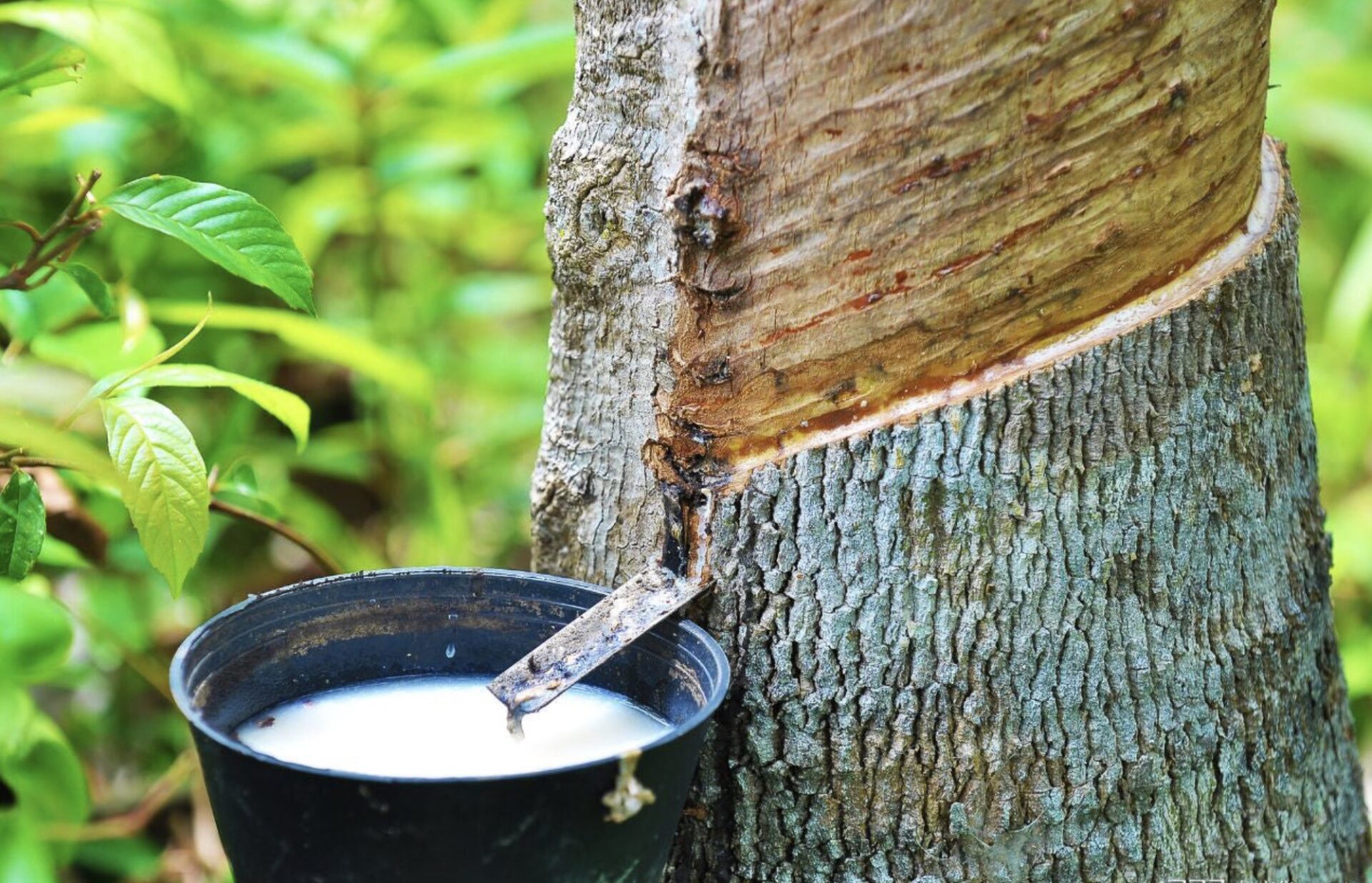
Christopher Columbus was the first European to encounter rubber during his second voyage to Central America in 1493. However, the true discoverers were the Maya, who had long before tapped the milky sap from Brazilian rubber trees. By mixing it with other plant extracts, they created rubber, which they used to make items such as balls and toys. The major breakthrough came in 1770, when chemist Joseph Priestley accidentally discovered that rubber could erase pencil marks. This gave rise to the name ‘rubber,’ derived from the phrase ‘to rub out.’
GOODYEAR’S DISCOVERY: RUBBER, CARBON BLACK & SULPHUR
In 1839, inventor Charles Goodyear discovered that adding a small percentage of sulphur greatly improved the properties of rubber. By accident, a mixture of rubber and sulphur ended up on his stove – a serendipitous event that changed everything. Heating rubber in this way, a process now known as vulcanisation, allowed it to remain elastic while becoming stronger and non-sticky. It was later found that adding carbon black to vulcanised rubber made it even stronger. Following Goodyear’s discovery, rubber trees were planted on a large scale worldwide, particularly in India, Ceylon and Indonesia, ensuring a global supply of rubber. In June 1844, Charles Goodyear patented his groundbreaking discovery, securing his place in the history of rubber.
PURE NECESSITY: THE BIRTH OF SYNTHETIC RUBBER
By the late 19th century, the rapid growth of the automotive industry made a synthetic alternative to natural rubber increasingly appealing. Petroleum proved to be a promising solution.
However, it was not until World War II that synthetic rubber production truly took off – driven by necessity. Natural rubber was extensively used in military vehicles and aircraft. A thick layer of natural rubber was applied around the planes’ fuel tanks. If a wing was pierced during combat, the kerosene would interact with the natural rubber, causing it to swell. This swelling partially sealed the hole, giving pilots a better chance of returning home. Ironically, the poor resistance of natural rubber to oil, petrol and kerosene turned out to be a blessing in disguise.
During the war, the Allies faced a critical shortage of natural rubber. Germany exacerbated the situation by torpedoing cargo ships with submarines to cut off supplies. Out of necessity, an alternative was sought, leading to the development of SBR. By the 1970s, synthetic rubber had overtaken natural rubber as the preferred material. Today, numerous types of synthetic rubber have been developed to meet various industrial needs
Source : https://www.risrubber.com/